
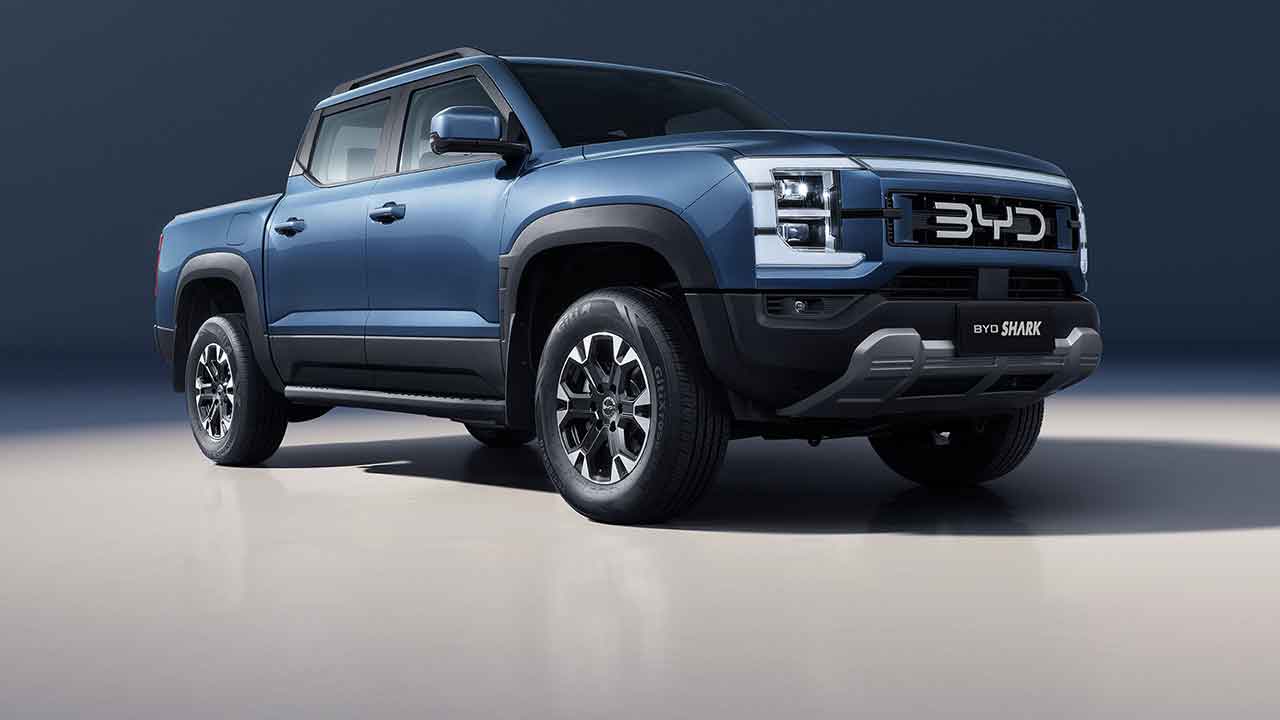
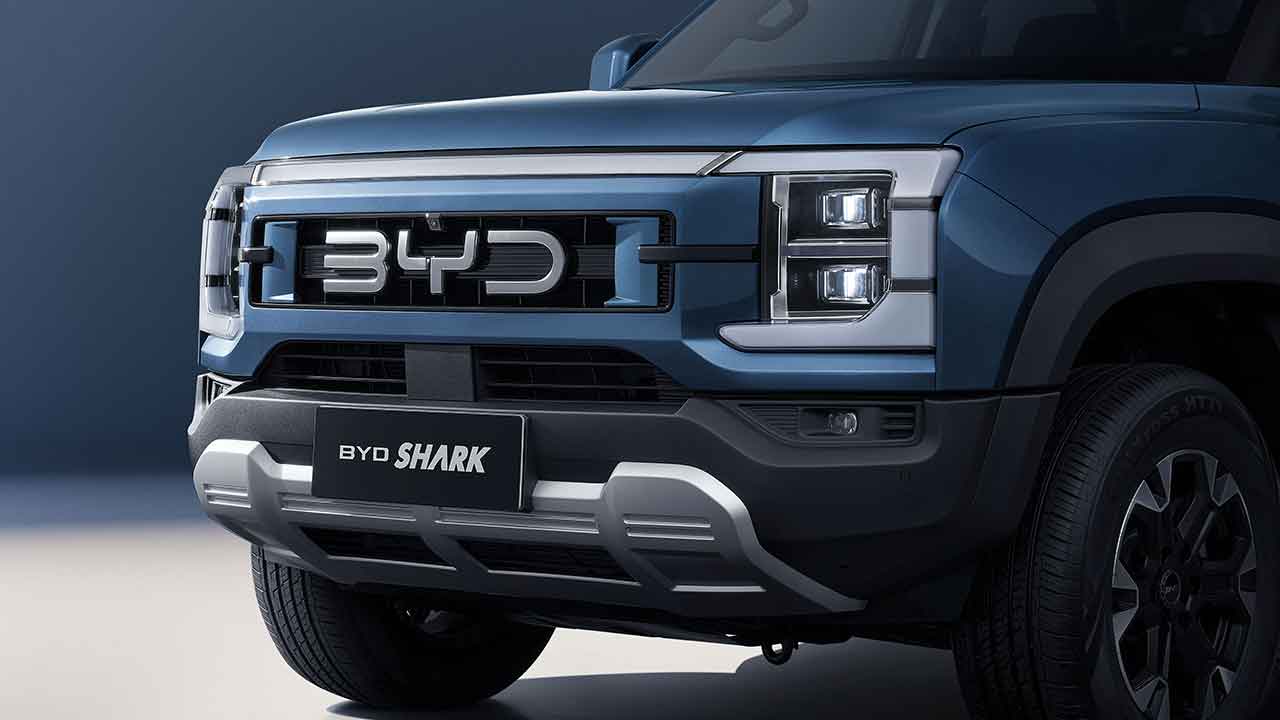
BYD has begun introducing the Shark to the European market, marking the Chinese brand’s entry into the plug-in hybrid pickup segment. The model combines a double cab, all-wheel drive, electric range for urban use and performance above the standard normally seen among diesel-powered pickup trucks.
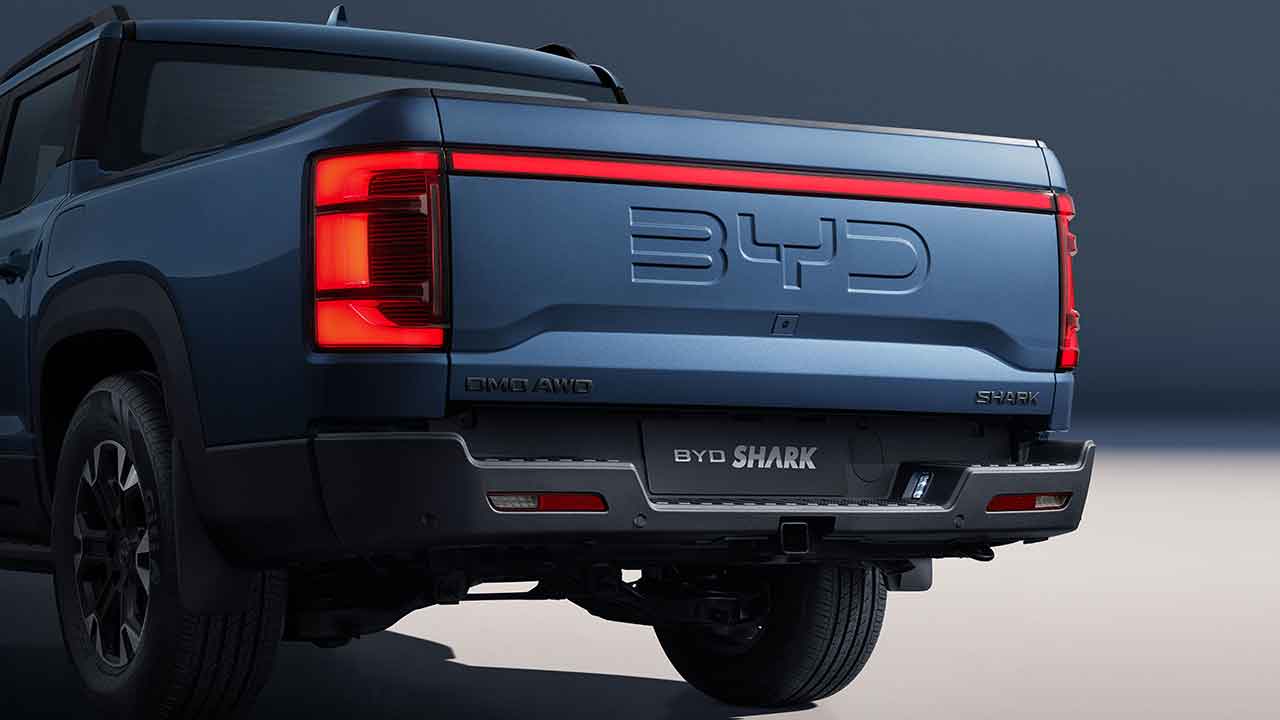
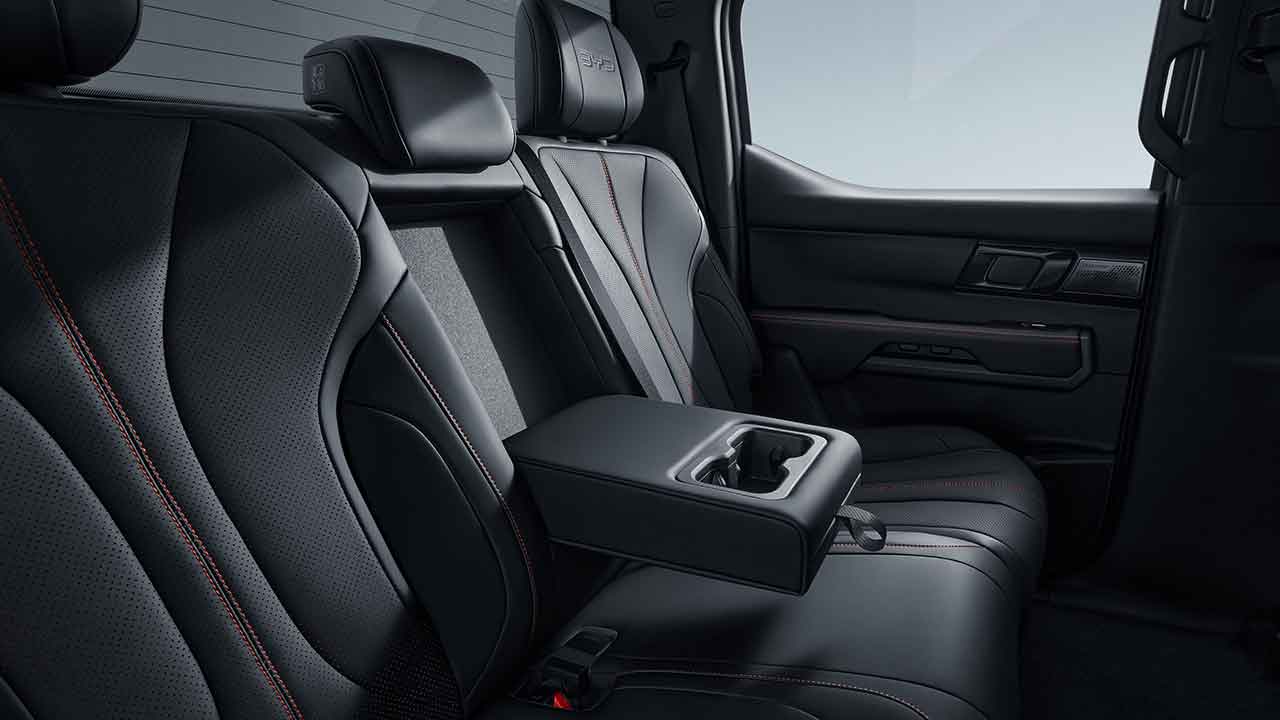
At 5.46 meters long and with a 3.26-meter wheelbase, the BYD Shark bets on a proposal that blends family use, work and leisure. The pickup has a cabin for five occupants, a cargo bed with 1,200 liters of volume and a towing capacity of up to 2,500 kg, figures that place it in the territory of midsize pickups sold in Europe.
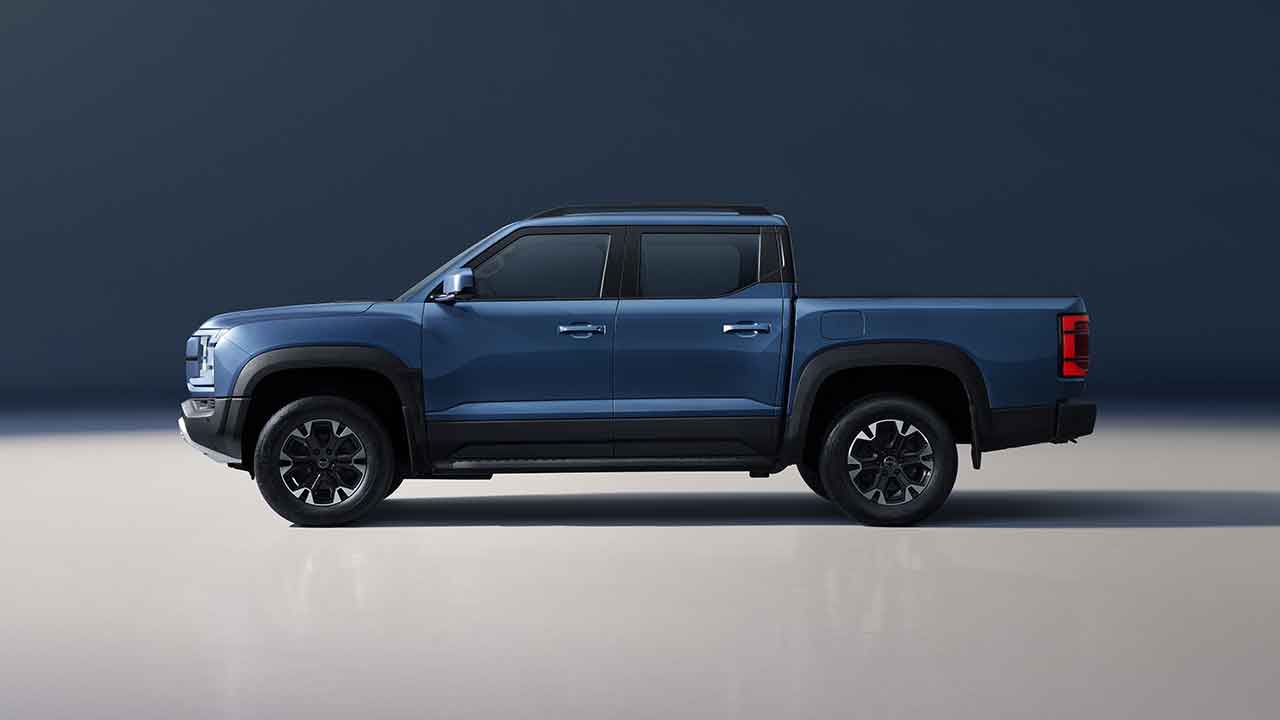
The main highlight is the powertrain. The Shark uses Super Hybrid DMO technology, short for Dual Mode Off-road, made up of a 1.5 turbo gasoline engine and two electric motors, one on each axle. The combination delivers 436 hp and 650 Nm of torque, allowing acceleration from 0 to 100 km/h in 5.7 seconds. For a pickup with a ladder-frame chassis and also focused on off-road use, it is an impressive performance.
Despite the power, BYD’s strategy is to sell the Shark as a more efficient alternative to traditional diesel pickups. The 32.2 kWh Blade battery allows it to travel up to 55.9 miles in fully electric mode on the WLTP cycle, equivalent to about 90 km. With the battery charged and the tank full, the stated total range reaches 419 miles, approximately 674 km.
In practice, the hybrid system can operate in different ways. On urban routes, the pickup prioritizes the electric motors, while the combustion engine can act as a generator. In situations of greater demand, such as hard acceleration or trips at a more constant pace, the system can combine the gasoline engine and the electric motors to deliver more performance or efficiency, depending on the need.
The Shark was also designed for use on varied terrain. The model has intelligent all-wheel drive, specific modes for sand, mud, snow and gravel, as well as independent suspension with double wishbones on both axles. Ground clearance reaches 230 mm without load, while the approach and departure angles are 31° and 19.3°, respectively.
Another feature that draws attention is Vehicle-to-Load, which allows the pickup’s energy to be used to power external equipment. BYD reports power of up to 6.6 kW, distributed through two outlets, a useful solution both at worksites and during leisure activities, such as camping or trips.
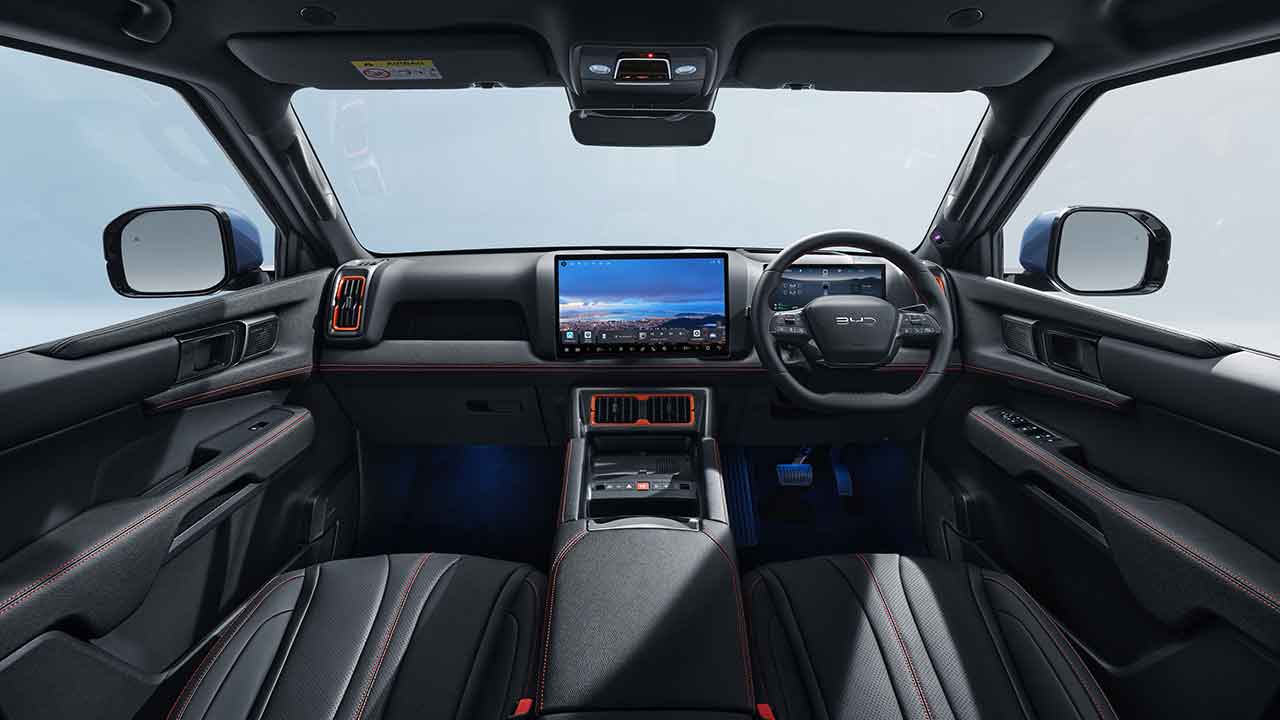
Inside, the Shark tries to move away from the image of a purely utilitarian pickup. The package includes a 10.25-inch digital instrument panel, a 15.6-inch multimedia center, head-up display, heated and ventilated front seats, wireless phone charger, Dynaudio sound system with 12 speakers, 360° camera and wireless integration with Apple CarPlay and Android Auto.
The safety equipment list is also extensive. The model features adaptive cruise control, front and rear collision warning, lane keeping assist, blind spot monitoring, rear cross-traffic alert, seven airbags, ISOFIX points and a tire pressure monitoring system.
In Europe, the BYD Shark will be sold in a single trim version, with a starting price of £47,290, including taxes in the United Kingdom. Orders are already open, and the first deliveries are scheduled for the fourth quarter of 2026.
With the Shark, BYD is trying to occupy a space still little explored in the European market: electrified pickups with real work capability, but with comfort, technology and performance closer to modern SUVs. The bet shows how electrification is also beginning to advance in segments traditionally dominated by diesel.
+ United Kingdom and the Netherlands announce multibillion-dollar deal for new amphibious ships
Source and images: BYD. This content was created with the help of AI and reviewed by the editorial team.
